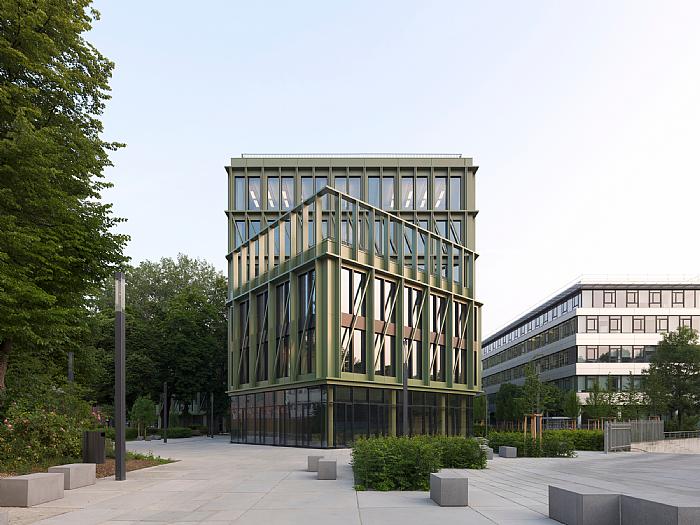
Wildeboer products installed in the i8 building on the iCampus, Werksviertel, Munich
Office buildings

Reference: i8 in Munich

Striking architecture, a hybrid timber construction and a high level of user comfort characterise the i8 office building in Munich’s Werksviertel district. Wildeboer is contributing to the achievement of the project’s ambitious goals through efficient ventilation technology and verified environmental product declarations. Duct pressure control plays a key role in this, enabling demand-driven air distribution with low airflow noise.

Project name: i8

Building type: Office building

Location: Munich iCampus

Architect: C.F. Møller Architects

Project manager: Schwab Engineers

RKW Architektur+, Merz Kley Partner, BWP Ingenieure GmbH, Drees & Sommer

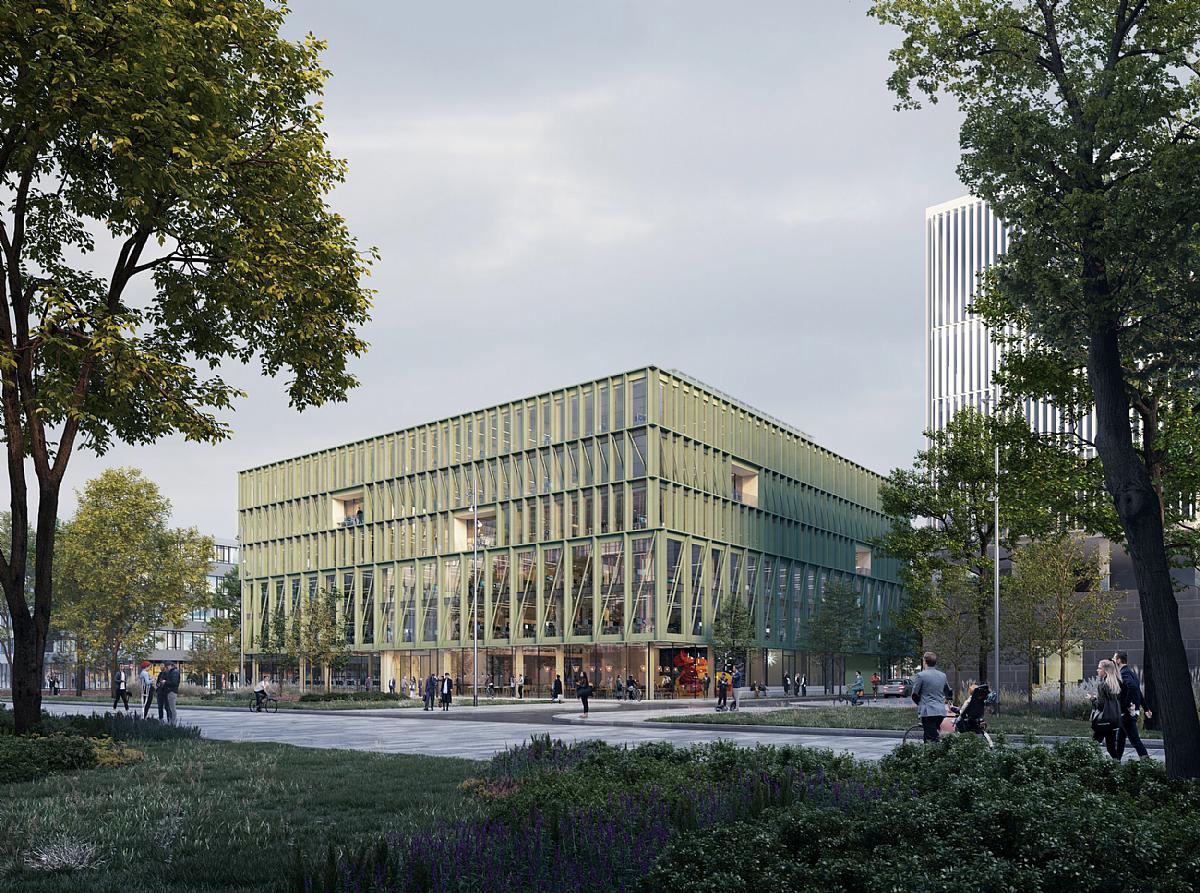
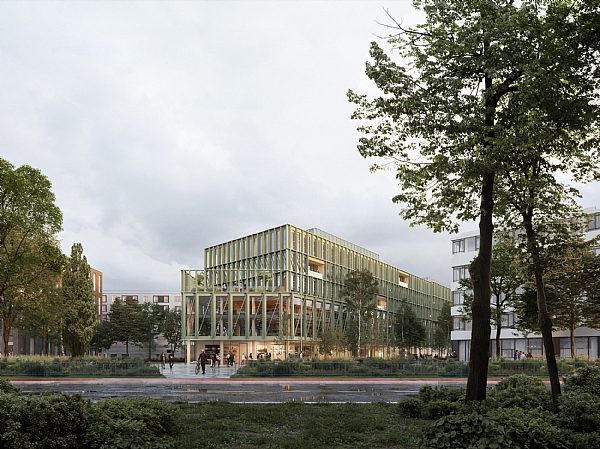
Visualisation of the i8 building in Munich: a futuristic design with large windows and adjacent parks.

i8: Versatile, comfortable and sustainable

Munich’s Werksviertel is internationally renowned for its unique architecture. The site, which covers approximately 39 hectares and is situated near Ostbahnhof, offers space for a new, modern, vibrant and sustainable neighbourhood. Alongside offices and restaurants, there is also room for hotels and retail outlets. The i8 building on the iCampus is a versatile office block with commercial space, constructed using a hybrid timber construction method. Work began in 2022 and the entire building was ready for use in 2024. The i8 offers a total of 20,000 m² of floor space and, with its striking silhouette, blends perfectly into the neighbourhood’s architecture. In 2023, the Werksviertel was awarded the prestigious German Urban Development Prize.

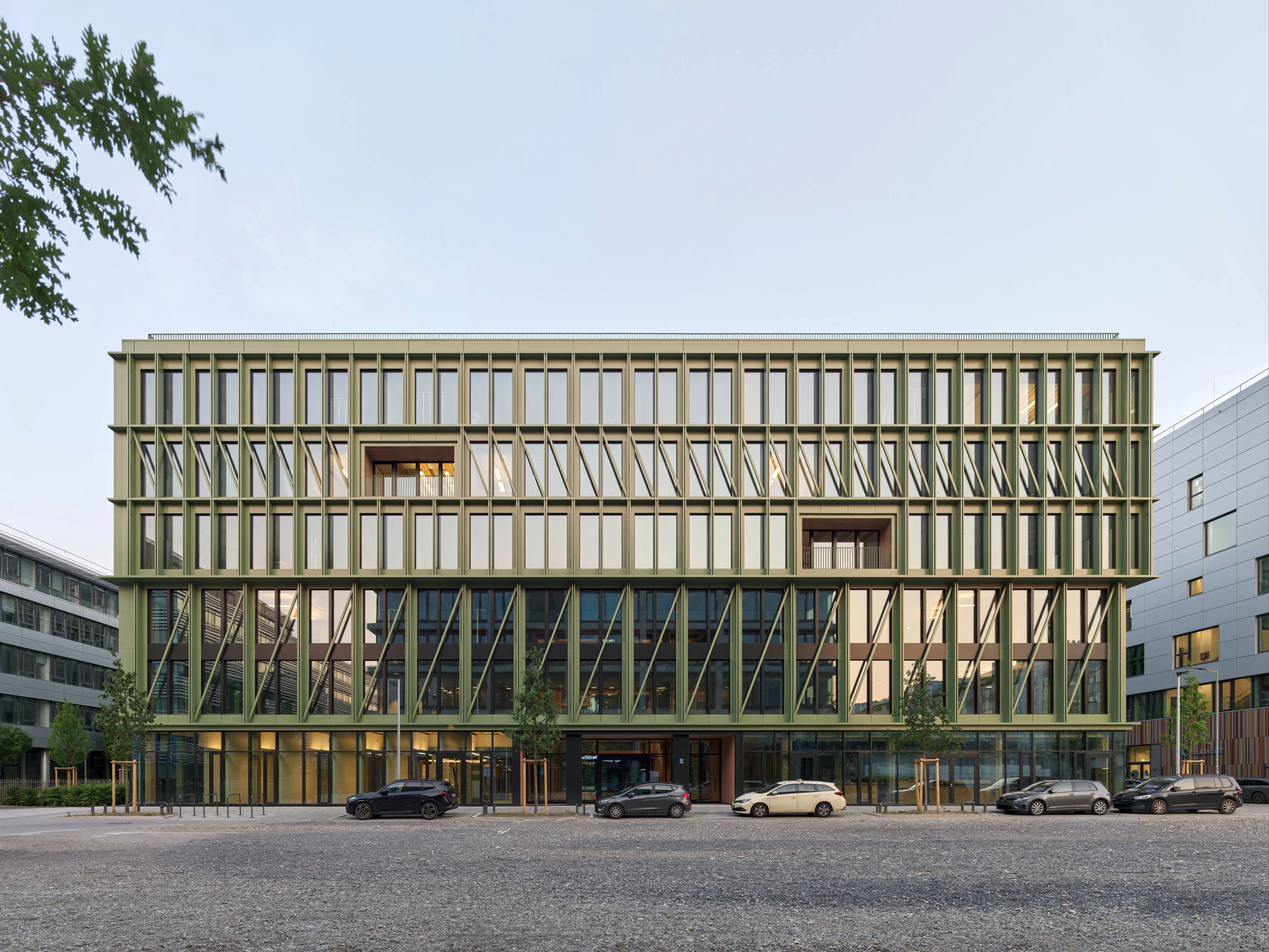
A modern i8 building in Munich with green glass façades and a green roof, fitted with Wildeboer fire protection products.

Already an award-winner

The building itself has also already won several competitions: in 2020, it secured first place in the architectural competition, and it is also a finalist for the “MIPIM Award 2026”. The i8 also won the German Design Award in 2025 in the “Excellent Architecture” category. In 2025, it was also awarded the “ZIA Office Award Gold”. The timber-hybrid construction and the façade made of recycled, anodised aluminium in a muted shade of green were designed to create a sense of well-being combined with the highest level of comfort – and the façade system offers a range of benefits: external sun protection guarantees optimal shading, whilst natural ventilation ensures a comfortable indoor climate. The connection to district heating and cooling supports the building’s sustainable character. The aim of the architects, planners and contractors was to create a flagship project with sustainability certification (LEED Platinum), which would become an important part of the iCampus and serve as a link between the former industrial area and the newly developing Werksviertel.

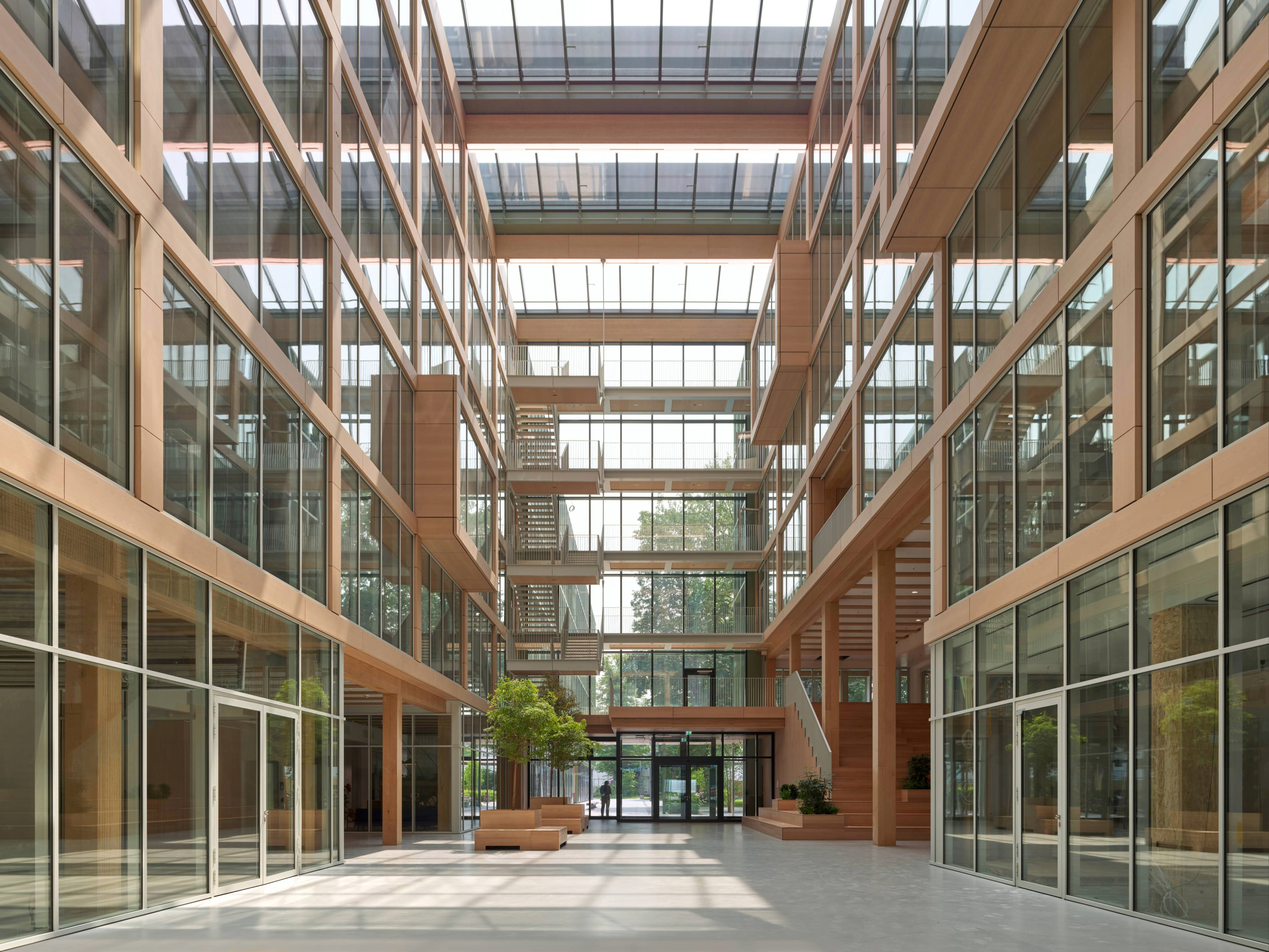
Interior view of the i8 building in Munich, featuring Wildeboer products for fire protection and air distribution.

Wildeboer as a ventilation technology partner

In order to have the i8 certified accordingly, stringent criteria must be met – and that is where Wildeboer comes in. A perfectly functioning, comfortable, high-performance yet efficient ventilation system is essential for the building and the quality of the indoor environment. Given the floor area of 20,000 m², effective air flow rate control was particularly crucial – and Wildeboer solved this using pressure control in the form of duct pressure control. This method has been relatively rare to date, but is gaining in importance, particularly as duct pressure control in comfort ventilation. Here, the static pressure in the duct serves as the control variable. This duct pressure is defined by comparison with a reference pressure, such as atmospheric pressure or that of an unventilated room. The pressure controller then adjusts the actual pressure in the duct – based on the setpoint pressure – to maintain a static overpressure or underpressure relative to the reference pressure. This method offers several advantages: As ‘pressure’ is the control variable, mechanical and electronic airflow controllers can be combined, and no oscillation occurs. Furthermore, a constant pressure prevails in all controlled branches, and these branches can be adjusted more easily. It has also been shown that the significantly reduced flow noise results in less effort being required for sound insulation measures.

Success with EPDs

All in all, therefore, an efficient and cost-effective solution – and, in this case, a particularly fast one too: Wildeboer is able to deliver the required products and components within 72 hours. This was one of the key factors in winning the contract for this project. Another decisive factor was that the certification process imposes specific requirements on the components. For example, manufacturers are expected to be able to provide the relevant Environmental Product Declarations (EPD) – and Wildeboer can do just that. Wildeboer has always strived to operate transparently. The company has also set the bar high when it comes to the ingredients in its products. Wildeboer recognised the strategic importance of EPDs at an early stage and began drawing up its first declarations as early as 2013. In doing so, the company attaches great importance to having its own data verified by an independent body.

EPD as a strategic tool

EPDs are becoming a competitive advantage for manufacturers of ventilation and HVAC products: Environmental Product Declarations (EPDs) are increasingly evolving from voluntary proof of sustainability to a decisive market factor in the ventilation, air-conditioning and refrigeration sectors. With the new EU Construction Products Regulation, stricter climate targets and rising demands on the environmental performance of buildings, pressure is mounting on manufacturers to provide robust and verified environmental data. For manufacturers of HVAC and building services products, this means in practical terms that those who can provide EPDs today create transparency and strengthen their position in a market where planners, investors, main contractors and operators are increasingly demanding well-founded sustainability data. This is because EPDs provide standardised information on a product’s environmental impact throughout its entire life cycle – from manufacture through the use phase to deconstruction. They therefore form the basis for:

  • building certifications such as DGNB or LEED
  • building life cycle assessments and ESG reporting
  • tenders and product selection
  • sustainable procurement and planning processes


For manufacturers of ventilation and HVAC products such as Wildeboer, EPDs have long since ceased to be merely a matter of sustainability communication. As in the case of the i8, they are becoming a strategic tool for market access, differentiation and future viability. Those who invest early on build trust, meet regulatory requirements and strengthen their competitive position.